
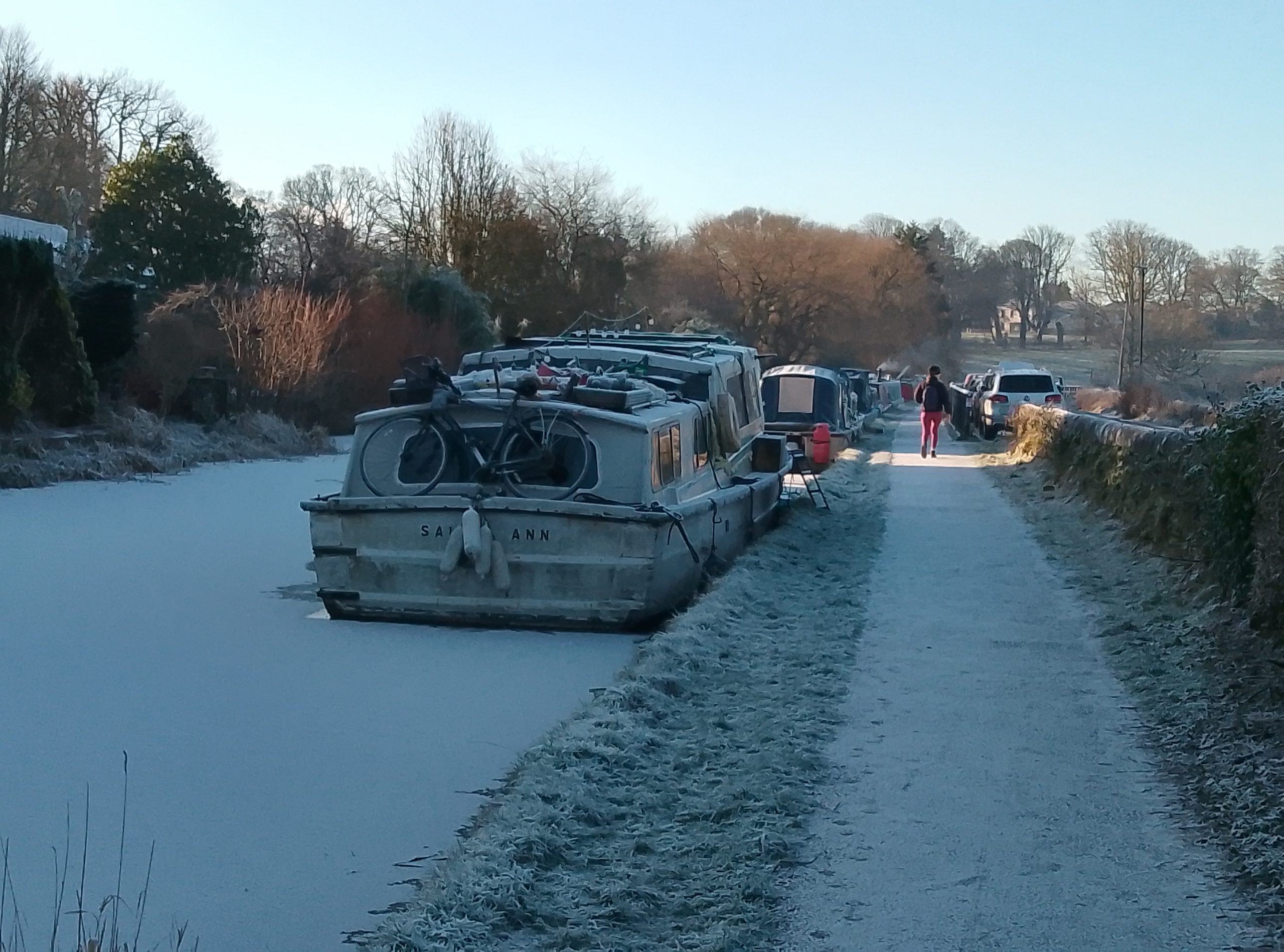
During the winter on the Lancaster Canal there are significantly less boats moving about. This is due to many liveaboards taking out a winter mooring or those that are normally out, going back into their marinas for the winter.
But for those that remain as continuous cruisers, the same old question arises everytime that the canal freezes over. Should I move my boat?
As a continuous cruiser you are required to move every 14 days, but what happens when the canal freezes and you are due to move? Typically this happens at some point each winter and usually the northern point of the canal frezes first. So you can expect ice from Lancaster and further North to appear first, then the Southern points around Garstang.
It’s always a good idea to keep an eye on the weather forecast during the winter. If snow or ice is forecast, plan ahead so that you can fill your water tanks and ensure you have enough fuel for the forecasted icy period. This helps ensure that you do not need to move to a water point when you are frozen in. If you think you may need access to water point then plan to move to a more accessible point a few days before the freeze, ensuring that you do not moor directly on a water point.
What does the CRT say?
The Canal and River Trust website states that ‘you should avoid cruising in thick ice’ and it advises ‘Don’t cruise if the ice is thick. It’s hard work for your engine and may damage the hull of your craft and others. And of course, never be tempted to walk on the canal when it’s frozen.’
The LCBA also advises you not to move when there is ice on the canal. It can create slippy towpaths and boat decks and significantly increases the likelyhood of falls or slips when trying to move your boat. It can also cause damage to your own boat and to other boats.
‘The impact of the sheets of ice created when people start ice breaking to get to water points or other moorings, can cause ice sheets to shoot across the top of a frozen canal and can seriously damage the hull of GRP (Fiberglass) boats’. They usually only scratch the paint or blacking of steel hulled narrowboats but this can cause serious long term damage if this goes unnoticed. It can also remove the blacking from your own boat, or potentially damage the hull of your cruiser if you are using a fibreglass boat.
Therefore it is highly recommended that you DO NOT cruise if the canal is frozen. Your boat neighbours will not thank you if you move and you risk damage to your boat and the boats of other people if you do – and your insurance might not cover you in the case of accidents.
What should I do?
The LCBA recommends that if you are due to move when you get iced in, you should call the Canal and River Trust on 0303 040 4040 and inform them that you are unable to move, and ask for an authorised overstay. You can also do this from your online user account on the Canal & River Trust’s website too. They will not expect you to move in icy or bad weather but it is recommendable to let them know that you are stuck should this happen.
You should also take a photo of your boat stuck in ice and ensure that the GPS location is switched on, on your camera when you do. This could be useful if you ever need to prove why you didn’t move, to the Canal & River Trust.
While on the main network there is a greater chance of boats passing by when the canal is frozen, you will always find someone who thinks they are the designated ice breaker on the Lancaster Canal. If you are worried about your boat, you can drop planks of wood from ropes into the water to run alongside your hull. The planks will absorb some of the impact of the sheets of ice created when people start ice breaking in order to move. Scaffold planks are an ideal solution and you can find both new and secondhand planks at most builders suppliers.
If you have a safeguarding concern about a boater who is stuck in ice, you should let us know by reporting your concern here.