The Lancaster Canal Boaters Association is developing proposals that could reopen and significantly improve the non-essential facilities at Lancaster Services, while protecting all of the essential Canal & River Trust services currently available to boaters.
The ideas are ambitious, but they are draft proposals only. No final decision has been made, no agreement has yet been signed, and the LCBA will not commit the association or its members to operating the building without further investigation.
Before any firm decision is taken, members will be consulted and given the opportunity to comment on the plans, their costs, their benefits and the responsibilities involved. A membership consultation on the proposals will take place soon.
Why is the LCBA looking at Lancaster Services?
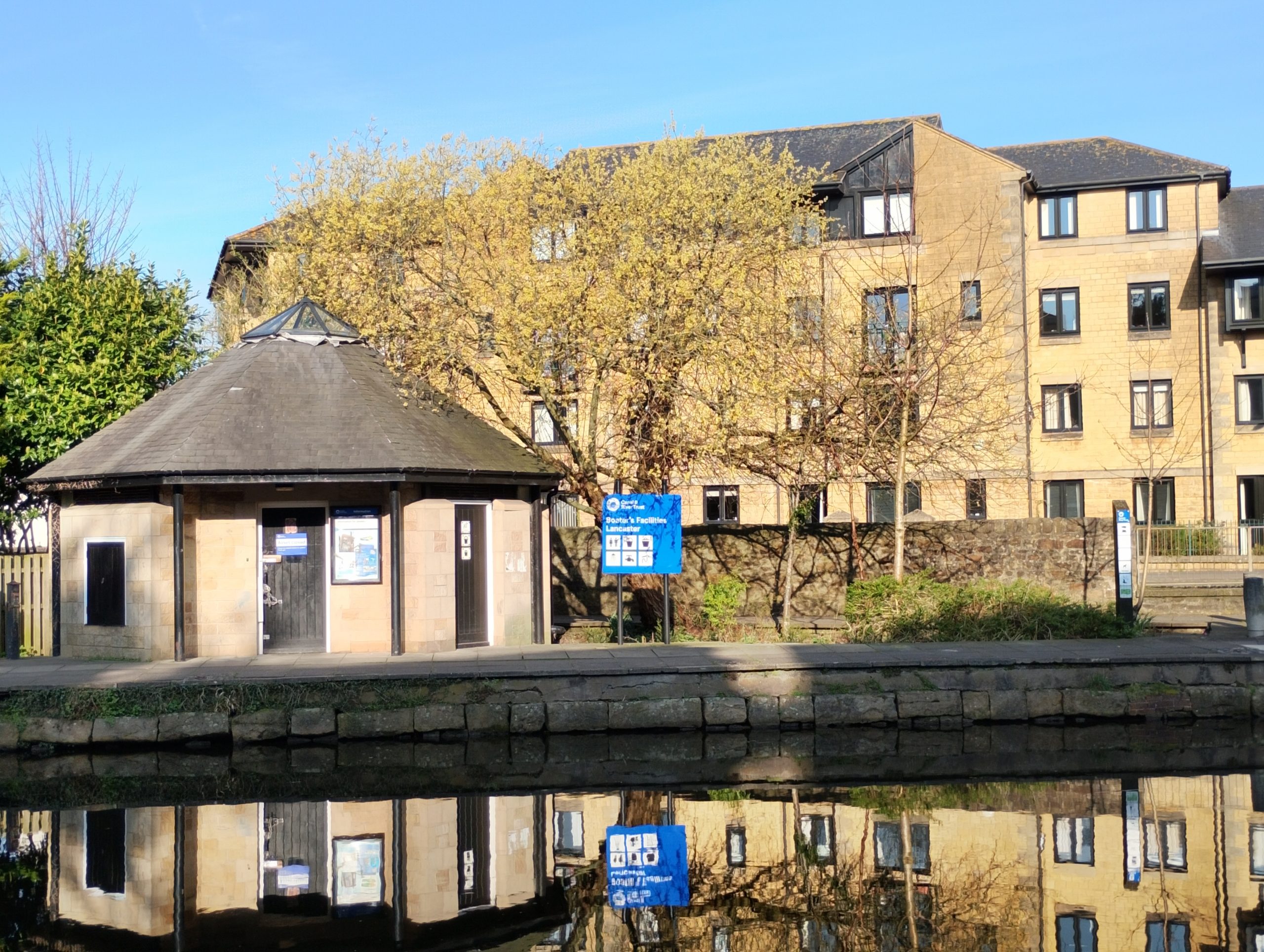
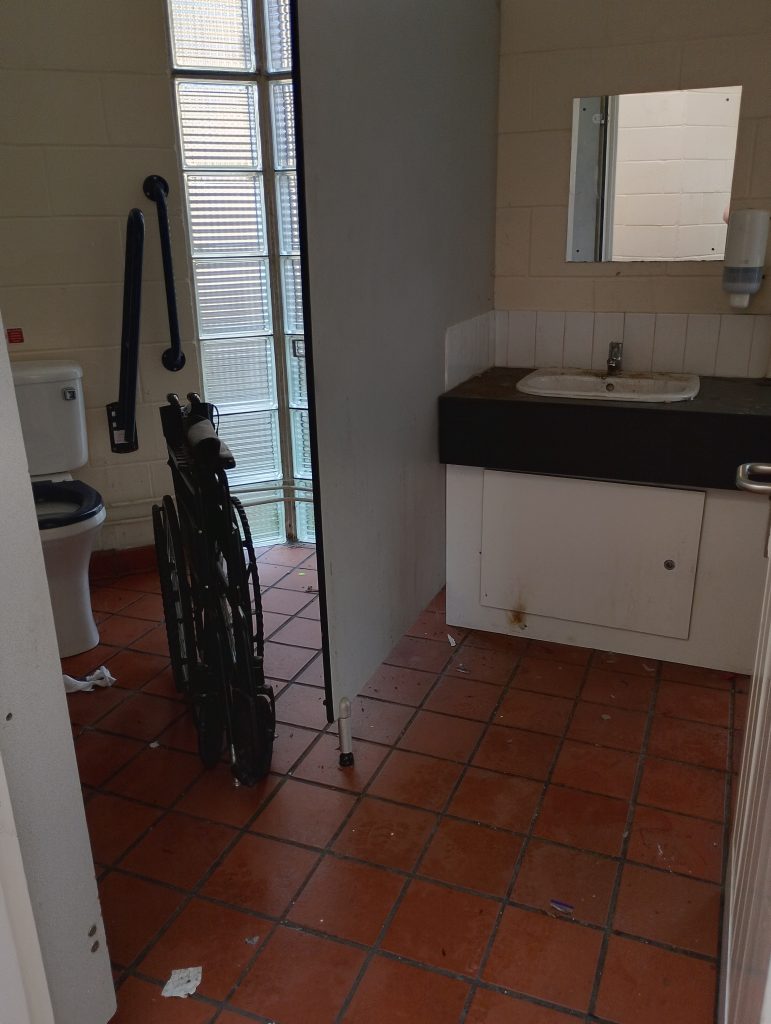
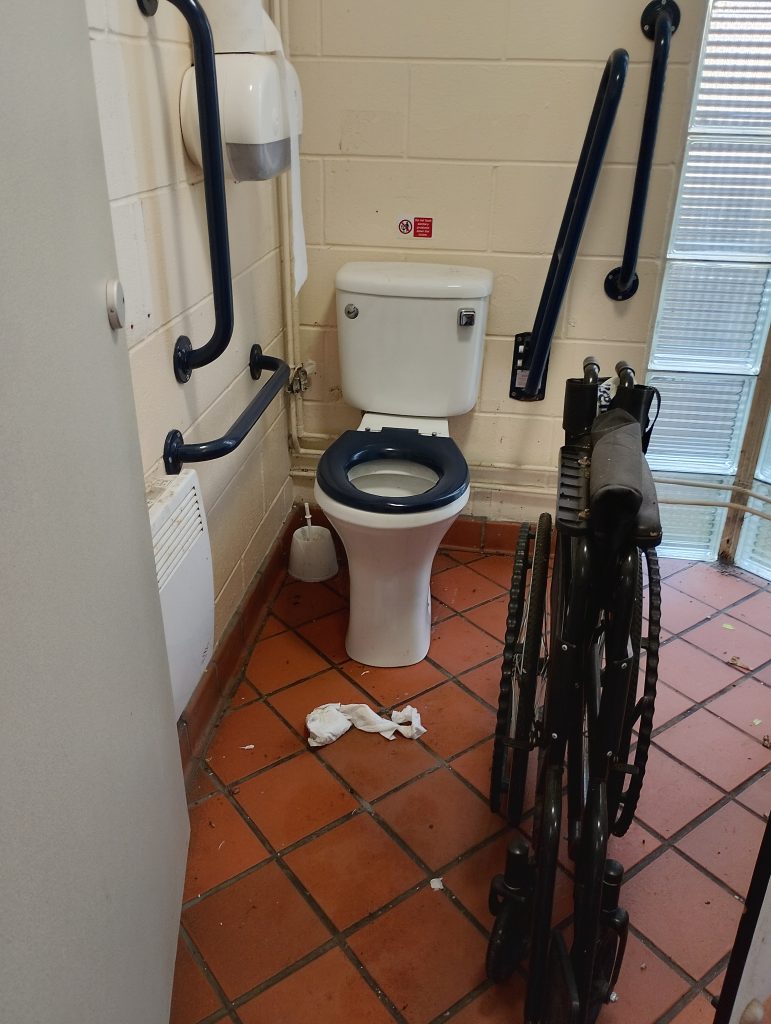
The Lancaster Services building contains the Canal & River Trust’s essential boater facilities, including the water point, Elsan disposal and pump-out service. It also contains two toilet and shower rooms that are currently closed.
LCBA representatives inspected the building with the Canal & River Trust in March 2026. The inspection found that the interior was generally in an acceptable condition, although cleaning, repairs and maintenance would be required. The report also recorded that the essential services were open and that there were no plans to close them.
Log in or become a FREE LCBA member to view the full report.The building therefore presents an opportunity to do more than simply reopen what was there before. With the right agreements, funding and community support, it could become a practical service hub for boaters visiting or living in Lancaster.
The four main proposals
1. Reopen a toilet and shower on a pay-per-use basis
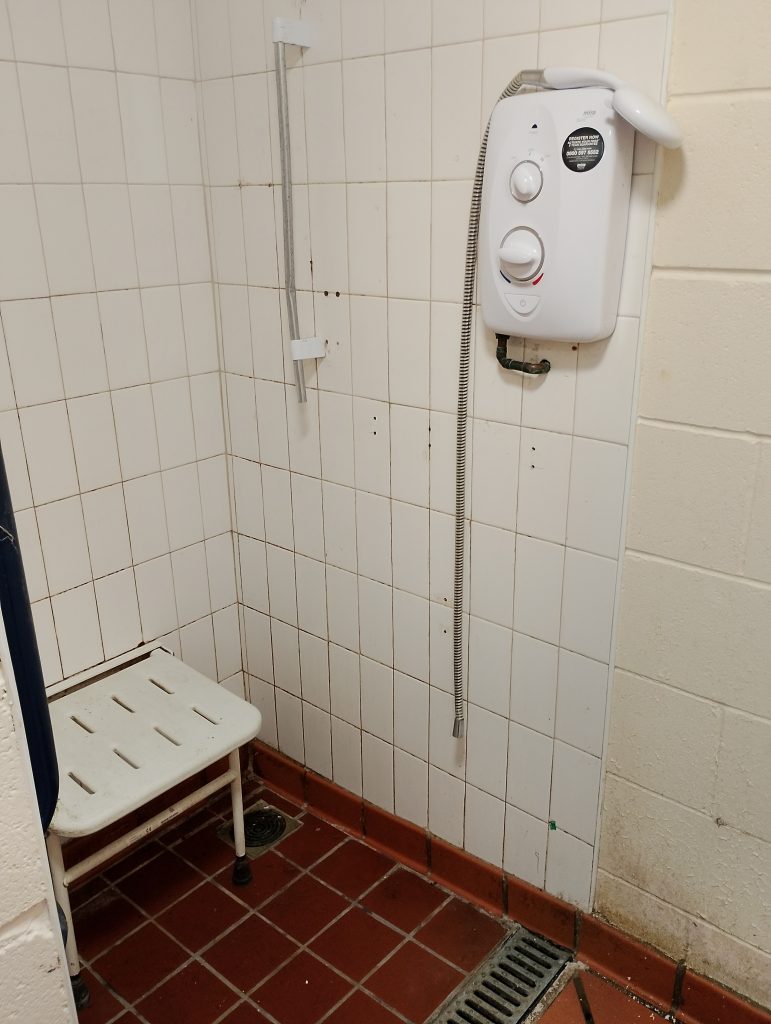
The first proposal is to refurbish and reopen one of the existing toilet and shower rooms. This would be the first stage of the project.
The facility would operate on a pay-per-use basis, potentially through a card, token or other controlled-access system. Any charge would be intended to contribute towards cleaning, electricity, water, repairs and ongoing maintenance rather than generate profit.
Discussions with the Canal & River Trust have already indicated that paid access to the non-essential facilities may be possible, provided that the Trust’s essential boater services remain accessible.
A clean and reliable shower would be particularly valuable to boaters whose onboard facilities are limited, temporarily out of service or difficult to use during maintenance work.
2. Create a laundry room
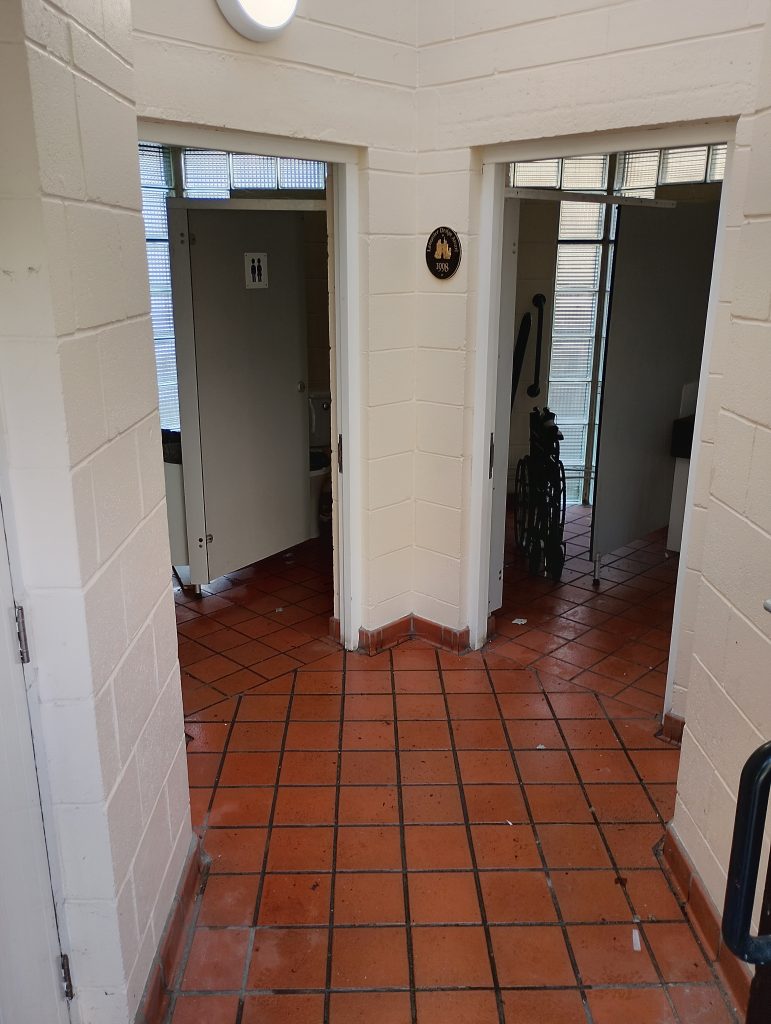
The second proposal is to remove the toilet and shower equipment from the other room and convert it into a dedicated laundry facility, this is likely to be the second stage of the project.
This could include:
- A washing machine.
- A suitable washing and drying area.
- Potentially a tumble dryer, subject to ventilation, energy costs and technical feasibility.
Laundry facilities are repeatedly identified by boat dwellers as an important missing service. Washing clothes aboard can be difficult for people with limited water storage, electricity or physical space, and visiting a town-centre launderette is not always practical.
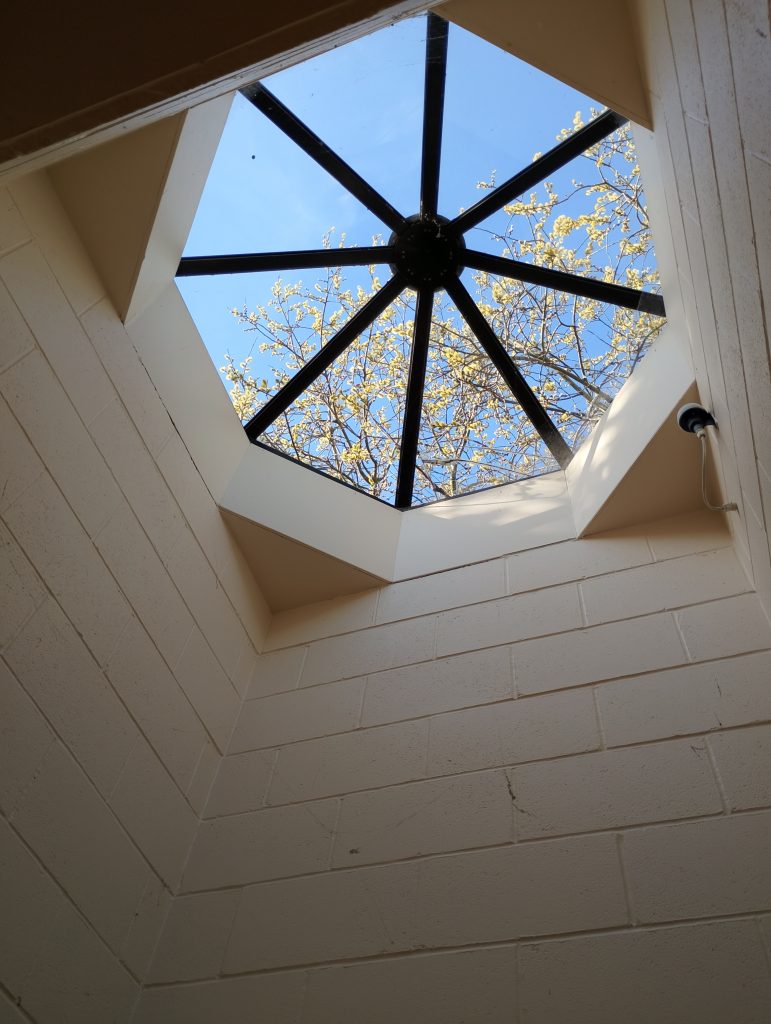
The photographs in the April report show that the building already contains two separate toilet and shower areas, giving the project some flexibility over how the available rooms might be reused.
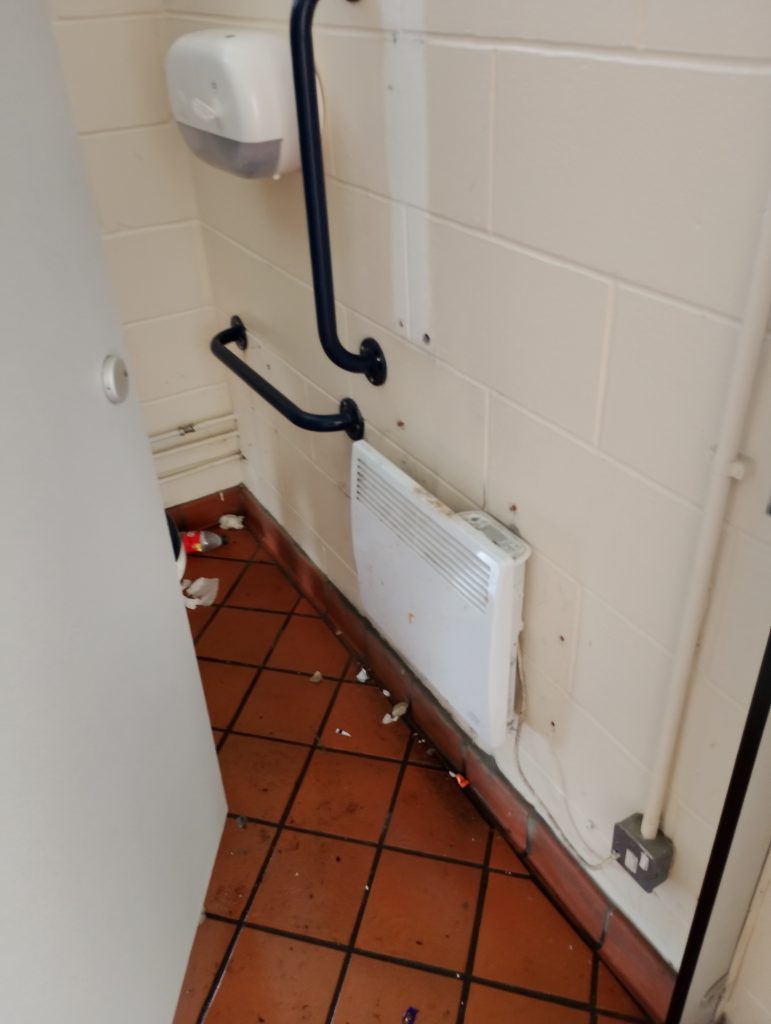
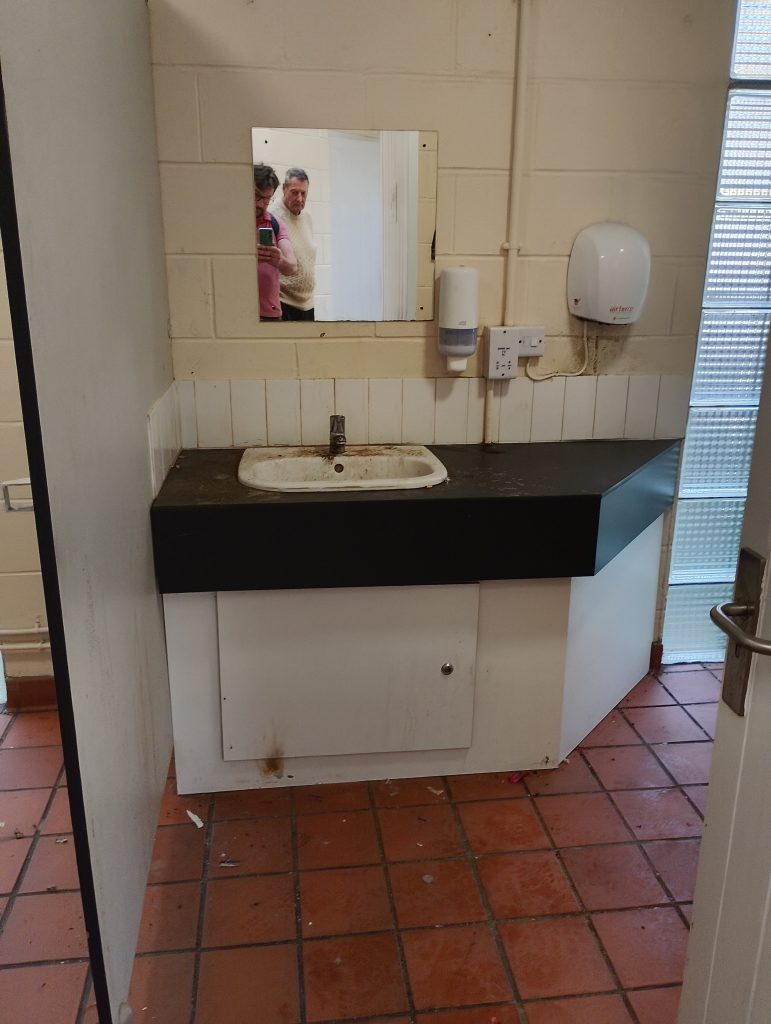
As with the shower, the laundry equipment would need to operate on a pay-per-use basis so that running and maintenance costs could be recovered.
3. Install secure postboxes for boaters
The third proposal is to install secure postboxes that could provide participating boaters with a fixed correspondence address. This is likely to be a second stage part of the project.
A lack of reliable postal access can create serious practical difficulties for itinerant boat dwellers. It can affect communication with healthcare providers, banks, insurers, government departments, support organisations and other essential services.
The proposed paid postbox service could offer a secure and consistent point for receiving correspondence while a boater moves around the canal. As with the previous stages, paid post boxes would be in place to help cover the costs of running the building, rather than generating a profit.
The precise arrangements would need further investigation. This would include security, data protection, mail-handling procedures, eligibility, charges and whether the address would be accepted by different organisations. It would also involve re-registering the building with the land registry.
The intention would be to provide a correspondence address, rather than claim that the services building was a person’s residential address.
4. Explore a small community café and kiosk
A possible final and third phase would depend upon discussions with the Canal & River Trust about the future design of the Elsan facility.
The Trust has been considering external-access Elsan units at some locations. Should an appropriate external arrangement prove possible at Lancaster, it could free the existing internal Elsan room for another use.
One option would be to convert the released space into a small kiosk-style community café serving:
- Tea, coffee and other non-alcoholic drinks.
- Cakes and light refreshments.
- Sandwiches and simple takeaway food.
The kiosk could potentially be run by volunteers as a community project or leased to a suitable third-party operator, with chairs and tables placed outside, bringing more footfall into that side of the canal and reducing anti-social behaviour that happens due to infrequent use of that part of the basin.
This could create a welcoming point of contact for boaters and towpath users while generating income to help sustain the wider facilities. It might also create volunteering, training or limited employment opportunities and bring the wider community together to better understand the boating community.
This remains the most speculative part of the proposal. It would require Canal & River Trust approval, suitable alternative Elsan arrangements, professional surveys, planning and regulatory checks, and evidence that the space could safely support food preparation and service. Most importantly, it would require a commitment from the LCBA member base and the boating community, if it were to become a community run enterprise.
Essential Canal & River Trust services would remain
The LCBA wishes to be completely clear that the proposals are not intended to remove or reduce essential boater services.
The following would remain available:
- Domestic-water provision.
- Elsan disposal.
- Pump-out facilities.
- Access arrangements required by the Canal & River Trust.
Even if the location or design of an individual facility changed, the principle is that essential services must be protected and kept operational.
Earlier discussions considered different ways of managing the building, including an arrangement under which the LCBA could take responsibility for the wider premises while the Canal & River Trust continued to support or contribute towards the essential services. The Trust has also indicated that any handover would need to leave the building safe and usable.
Positive local discussions
The LCBA has held positive conversations about the emerging ideas with Caroline Jackson at Lancaster City Council and with local ward councillors Paul and Dave.
These discussions have helped demonstrate that Lancaster Services could have a wider community value. The building could provide practical support for boat dwellers, improve the appearance and use of the site, increase positive activity around the premises and create a stronger connection between the canal community and the city.
No council commitment should be inferred at this stage, but the conversations have been encouraging.
Could the project attract funding?
The proposals may be suitable for an application to the National Lottery or another community-funding programme.
A funding bid could potentially cover refurbishment, accessibility work, laundry equipment, secure postboxes, payment systems, energy-efficiency improvements and the creation of a community space.
Eligibility and success cannot be guaranteed. A strong application would need:
- A clear demonstration of community need.
- Evidence of consultation with boaters.
- Realistic capital and operating budgets.
- Appropriate safeguarding and management arrangements.
- Permission to use and alter the building.
- A credible plan for keeping the facilities financially sustainable.
The Canal & River Trust has also previously indicated that its enterprise colleagues could investigate possible funding avenues.
The financial questions must be answered
Taking responsibility for a building brings costs and legal obligations. These may include electricity, water, sewerage, testing, insurance, cleaning, equipment servicing, repairs and provision for vandalism or unexpected failures.
The April report included indicative annual costs and recommended maintaining a separate contingency or “risk pot.” These figures underline why a sustainable income model and a detailed agreement with the Canal & River Trust would be essential before proceeding.
The LCBA will not take on an open-ended financial commitment simply because the idea is attractive. The project must be workable and financially viable.
Members will decide the next steps
The current proposals are a starting point for discussion, not a finished blueprint.
Before the LCBA makes any binding commitment, members will be asked for their views. The forthcoming consultation will consider:
- Whether members support the project in principle.
- Which facilities should be prioritised.
- What charges would be considered reasonable.
- How the building should be managed.
- Whether volunteers would be willing to help.
- What financial and legal safeguards should be required.
- Whether the LCBA should proceed if suitable funding and agreements can be secured.
The committee will then consider the consultation results alongside professional advice, costings and discussions with the Canal & River Trust and Lancaster City Council.
Turning a closed building into a useful canal hub
Lancaster Services already contains much of the basic infrastructure needed to create something valuable.
With careful planning, it could provide a shower, laundry facilities, secure postal access and, eventually, a small community kiosk. It could become a visible and welcoming hub where practical support, information and community life meet.
There is still a considerable stretch of water to travel before that vision can become reality. But the LCBA believes the possibilities deserve to be explored openly, responsibly and with the full involvement of its members.